Magic Hour

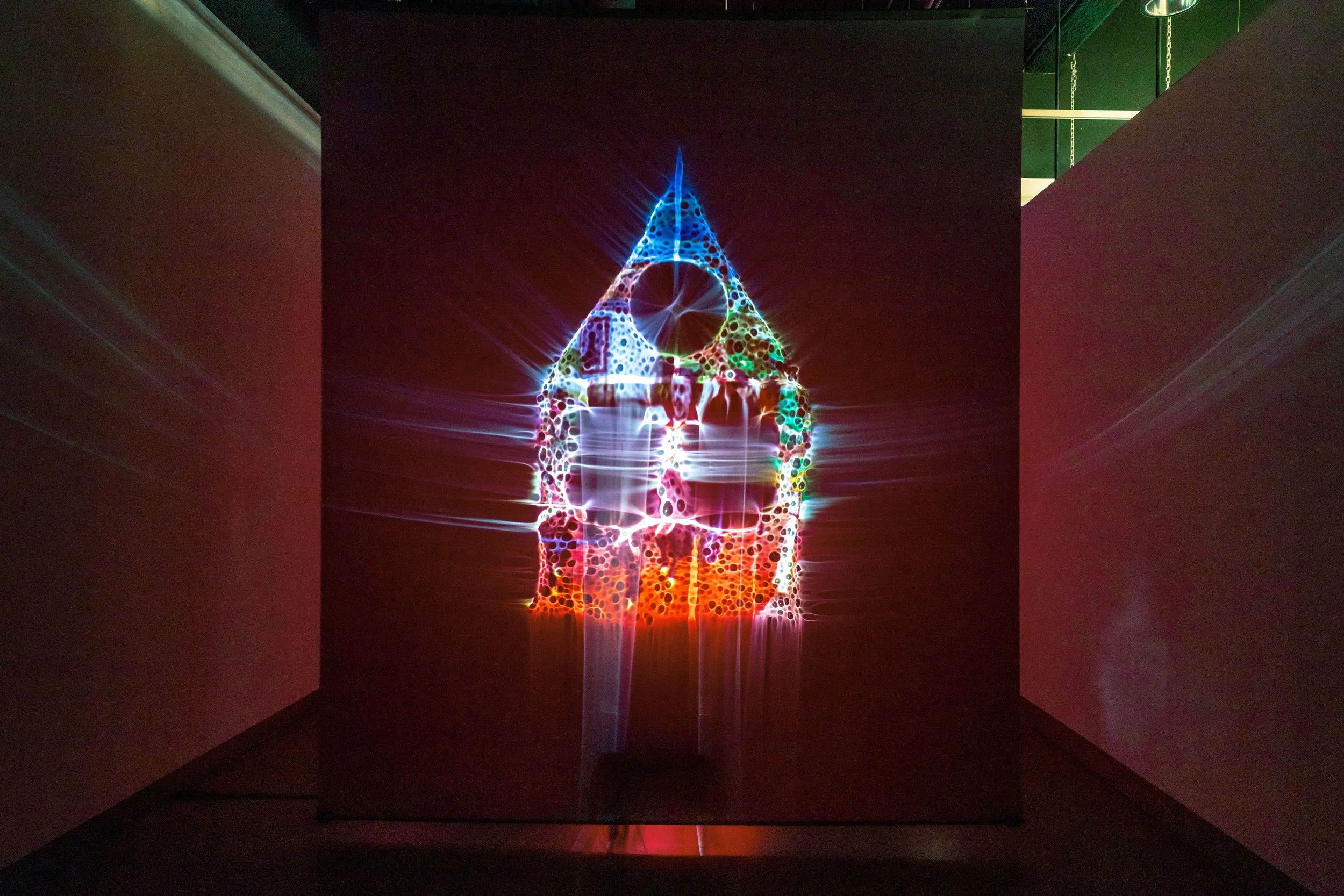
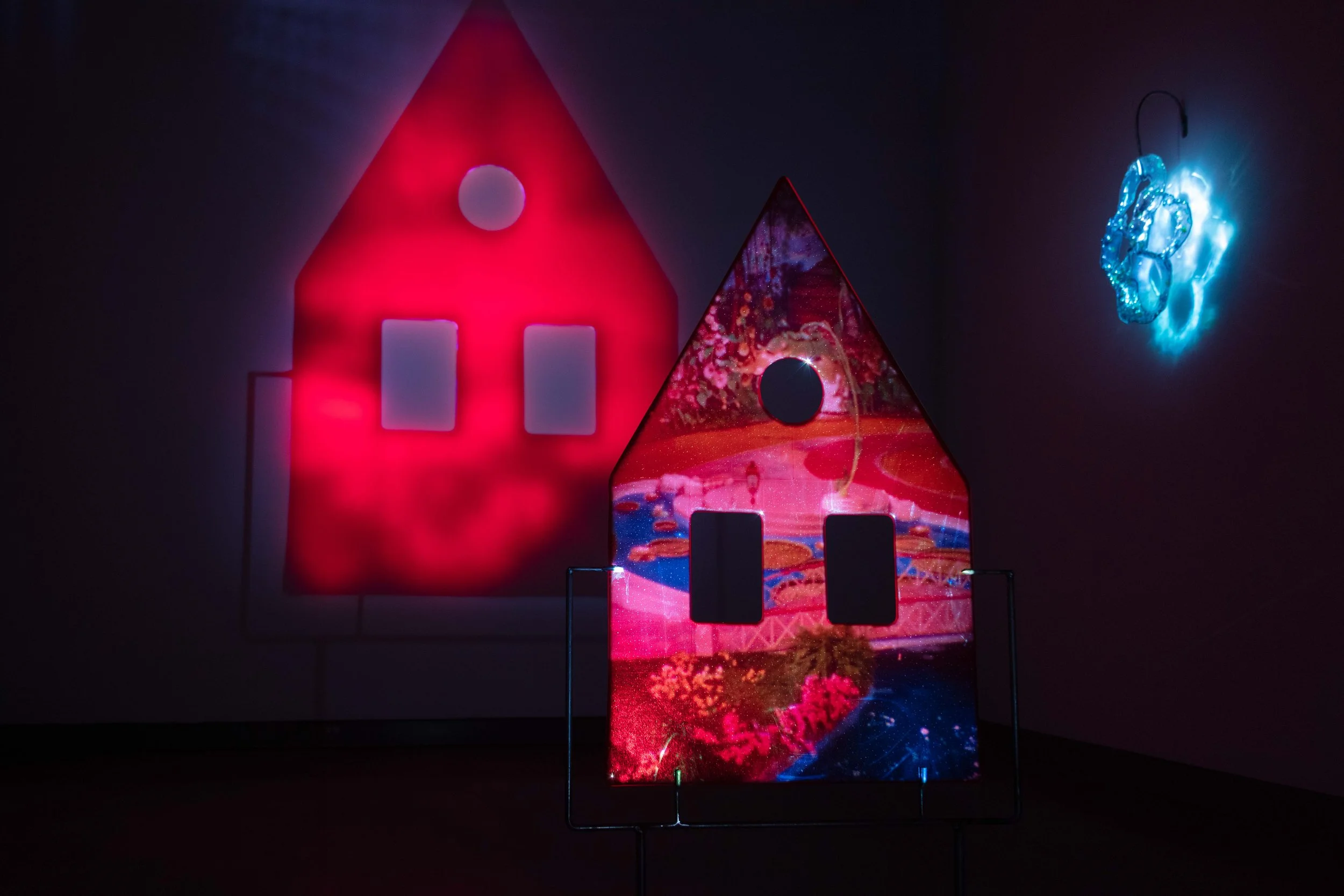


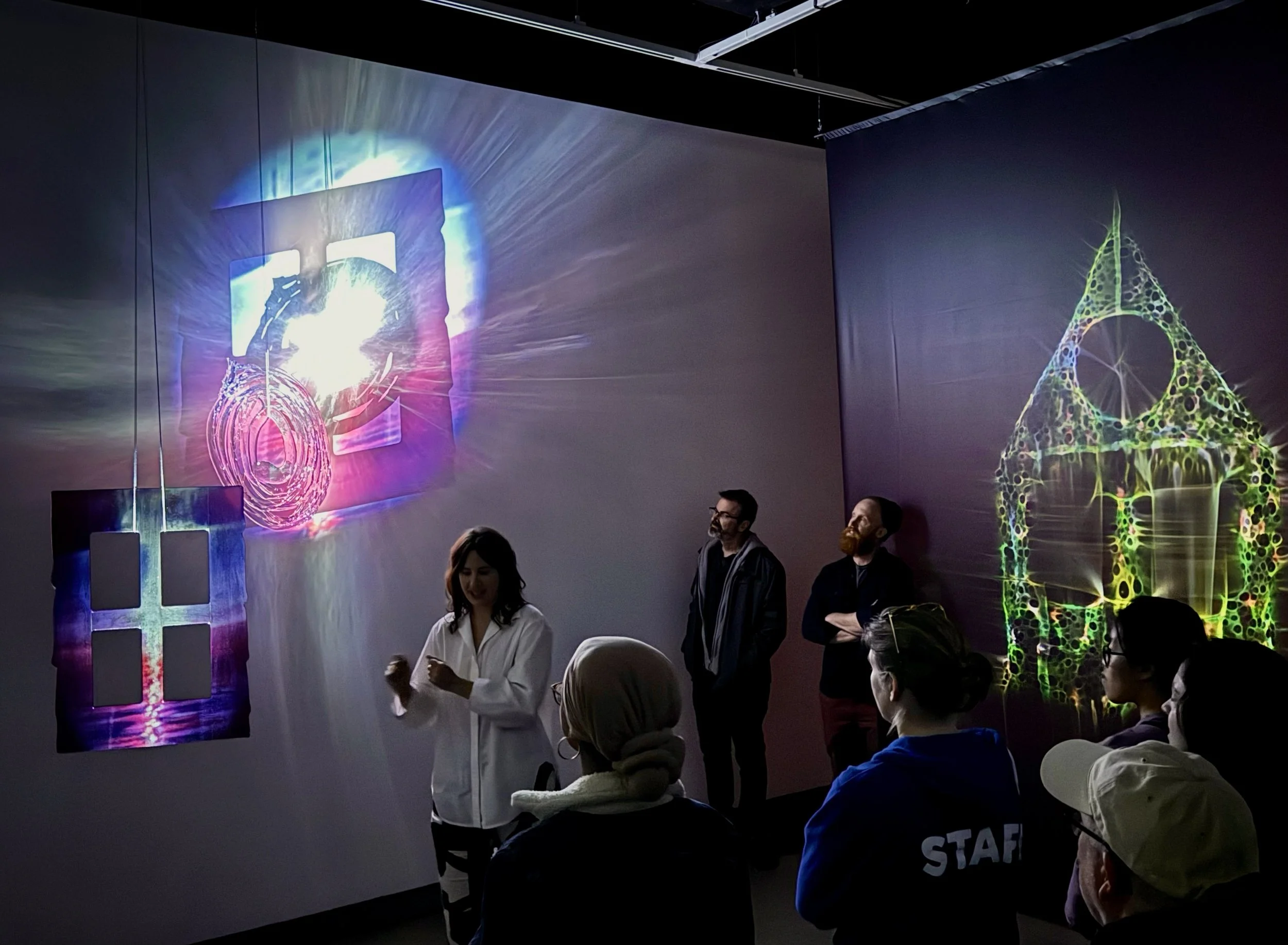
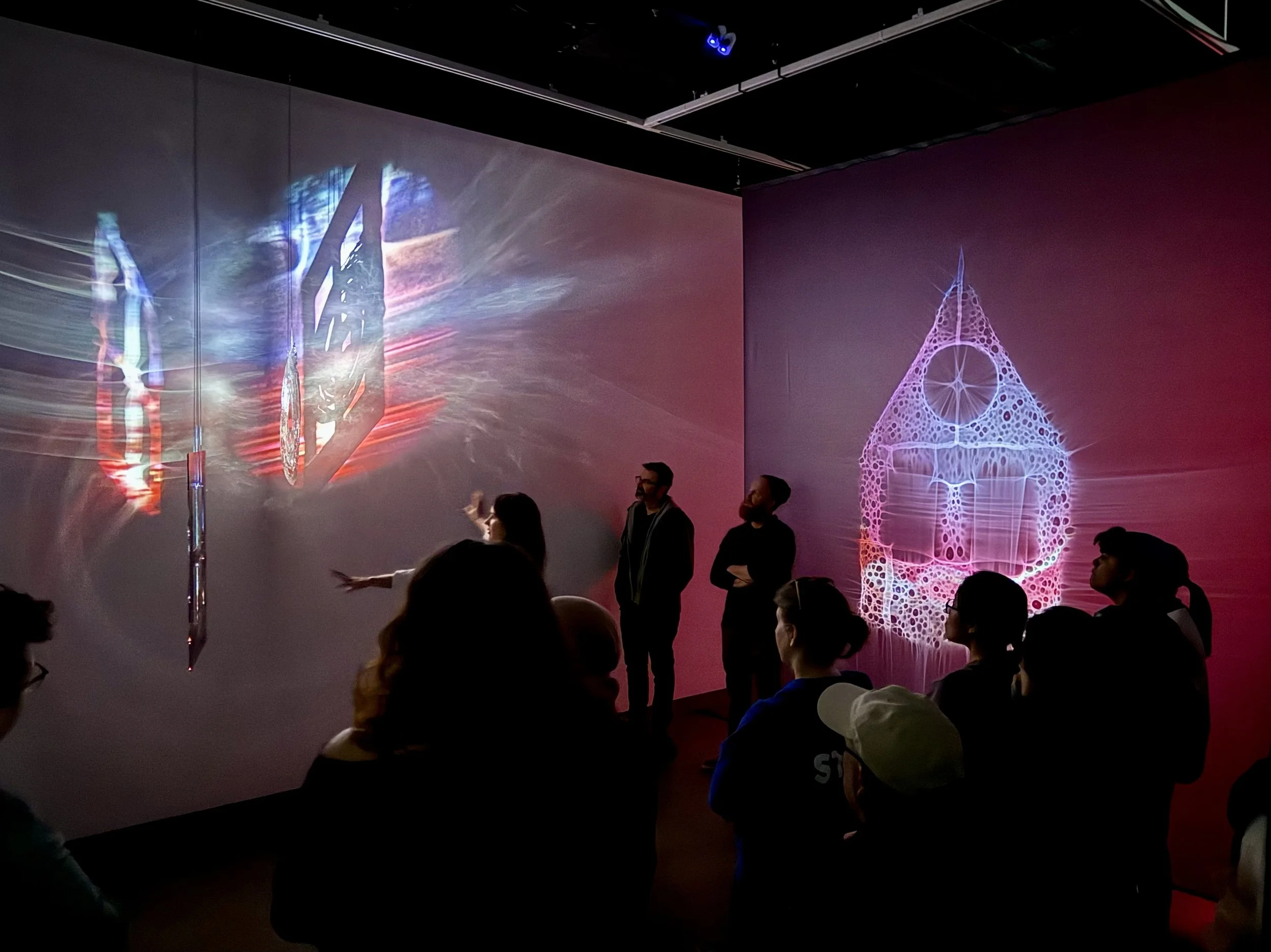

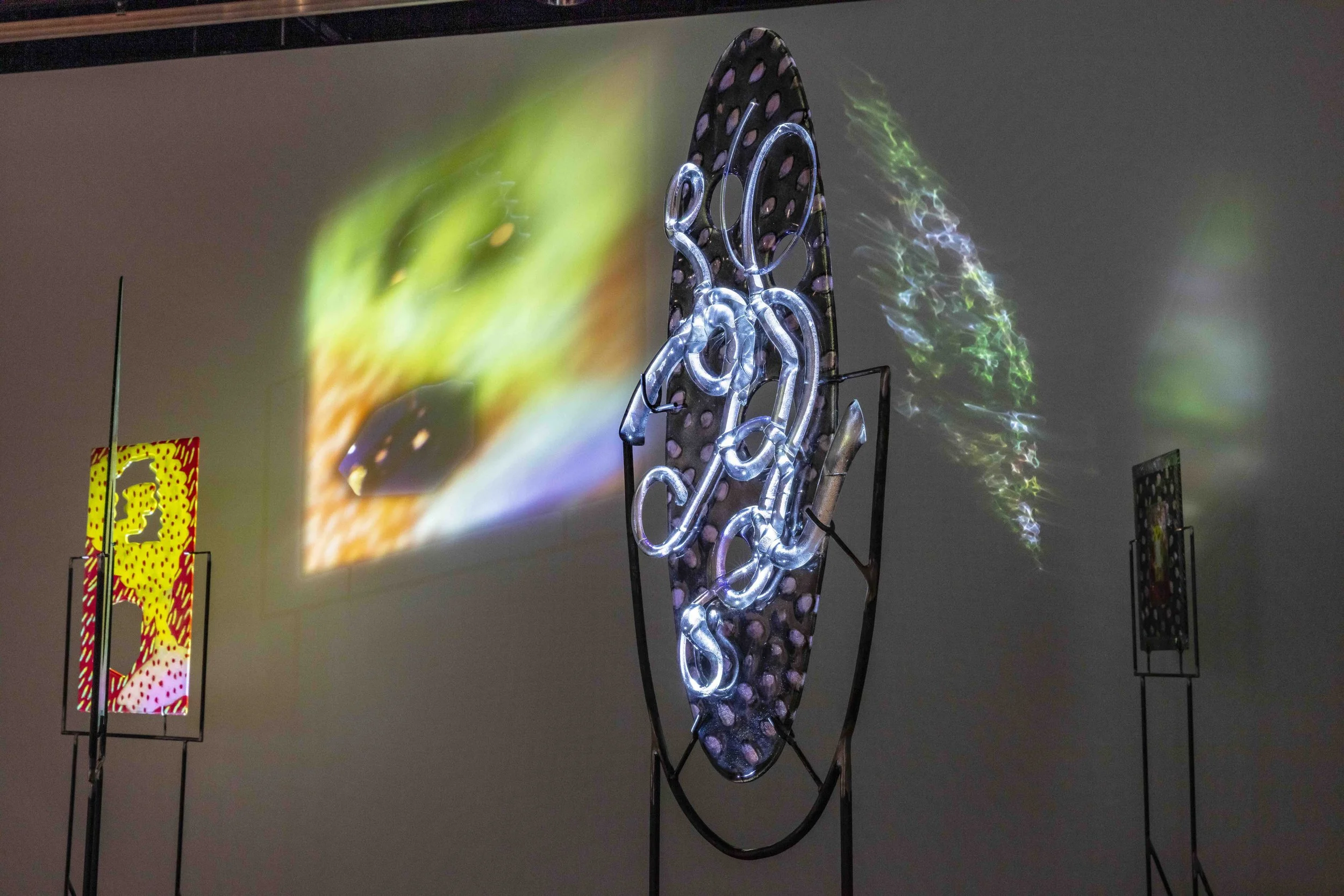
Exhibition: Miller Institute of Contemporary Art, Pittsburgh, USA (2024)
Magic Hour comprises a series of kiln-formed and hot-sculpted glass sculptures that warp and scatter video projections across the gallery space. The glass fractures moving images into shifting apparitions that crawl across walls and flicker through apertures. Here, Saxelby uses glass as an optical instrument to disturb the singular, controlling gaze inherited from Renaissance perspectival vision, instead finding ways of seeing that resist the certainty of edges and absolutes. The title invokes the liminal moment at dusk when colour is most vivid before nightfall exposes it as a fiction of light. In Magic Hour, form is not a fixed entity, but becomes a mirage or an afterimage on the underside of one's eyelids.
Sound: Ollie Brown | Documentation: Tom Little (photo), Max Cianci (video)
Propositions for Architectural Ornaments
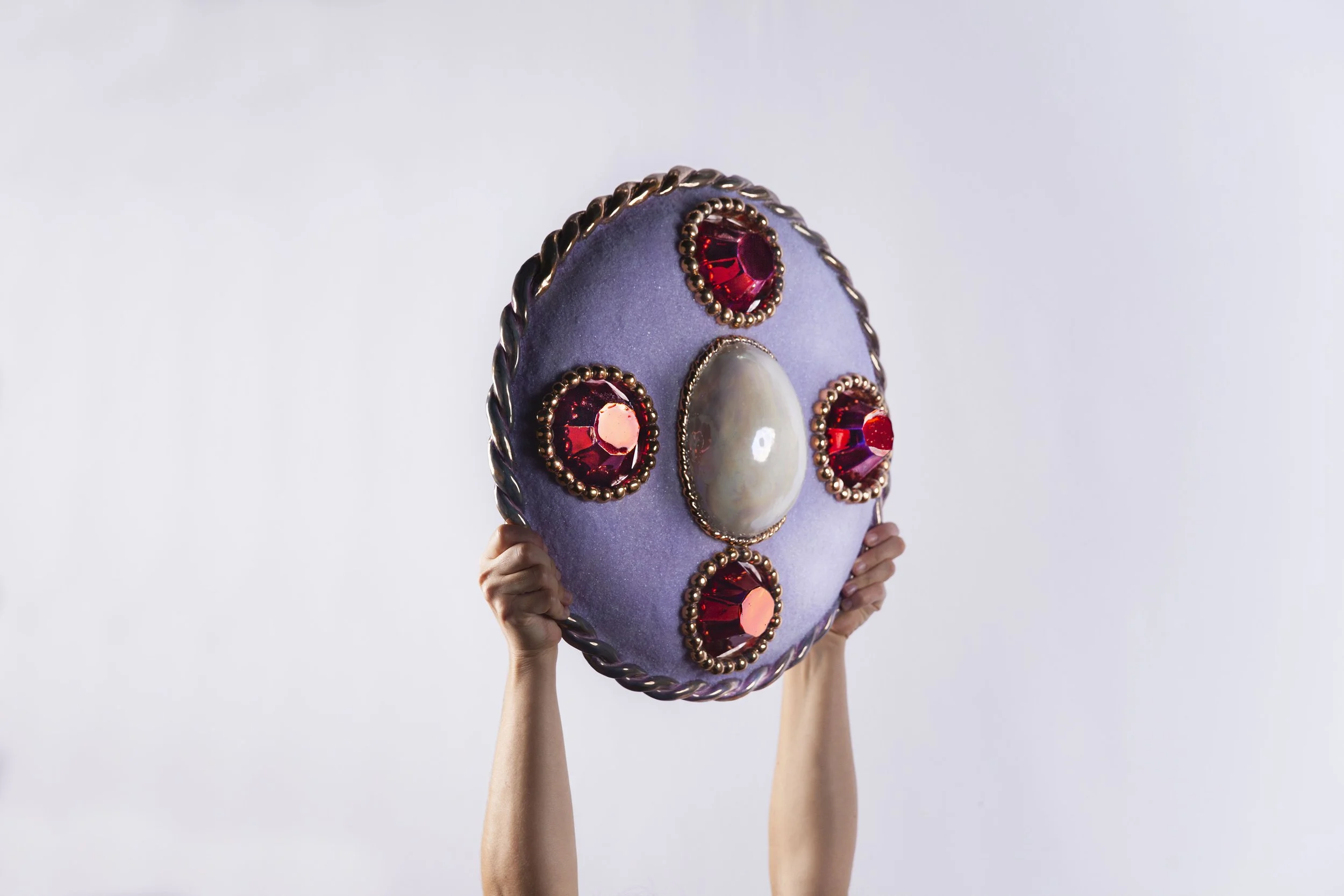


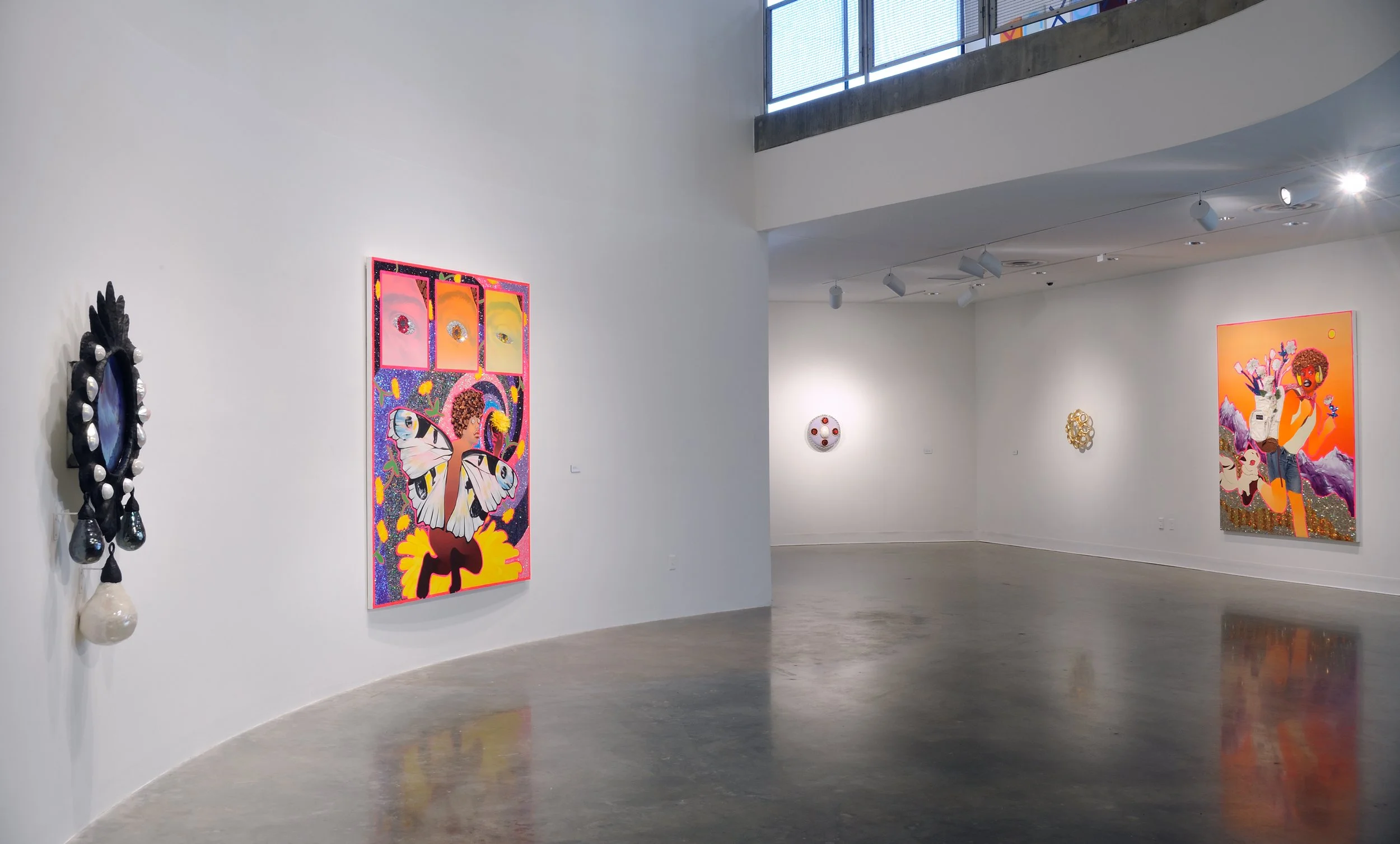


Exhibition: Make-Believe with Devan Shimoyama at the Katzen Art Center at the American University Museum, Washington, D.C. (2023)
In Propositions for Architectural Ornaments, Saxelby invents speculative ornaments to re-decorate Neoclassical facades of monumental architecture. Her glittering and color-shifting ornaments in ceramic and glass are drawn from the costume jewelry collection inherited from her late Polish grandmother, and enlarged to an architectural scale. This series was developed following an 18-month artist residency in Washington D.C., a capital designed to project imperial ambition through Neoclassical grandeur. Saxelby weaponizes the fantasy and artifice of costume jewelry against the Classical tradition's fear of surface decoration as corruption (Adolf Loos: "ornament is crime"), aiming to expose Classicism's obsession with purity, austerity and naturalness as themselves constructed and artificial. In doing so, the artist proposes re-decorating as a form of architectural drag and as a strategy of subversion and reclamation.
Photo: Shan Turner-Carroll, Kate Warren, Gregory Stanley
Lullaby


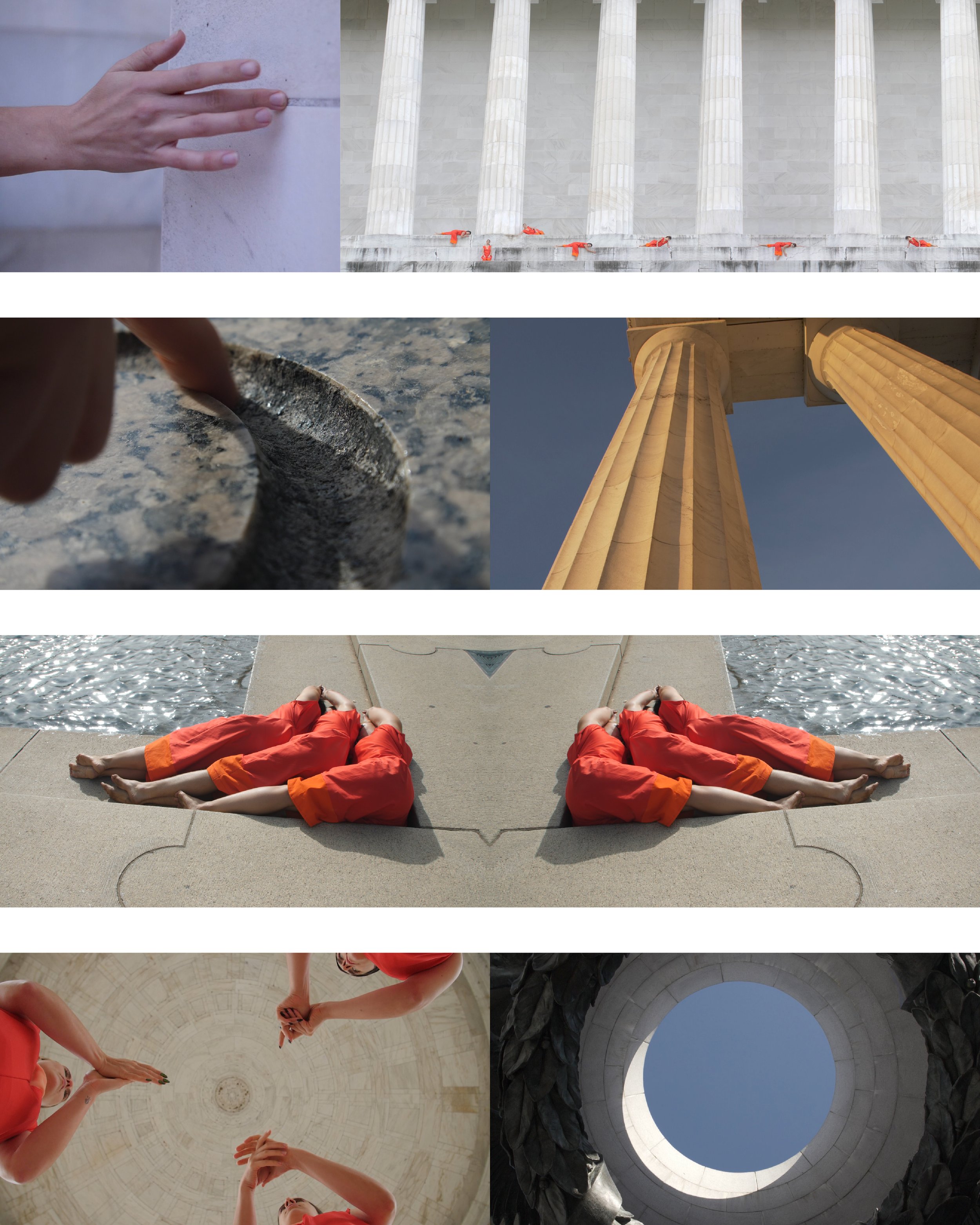

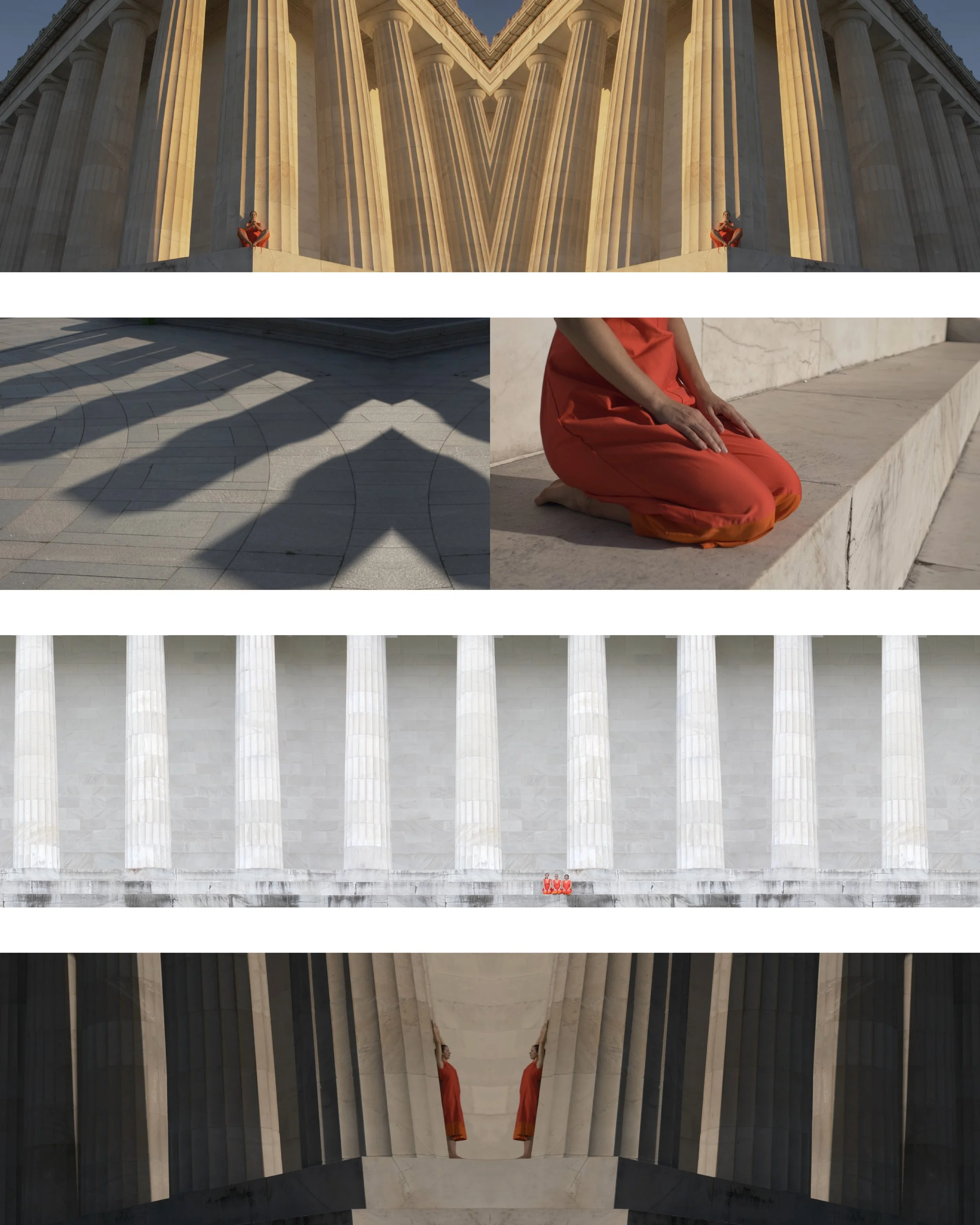

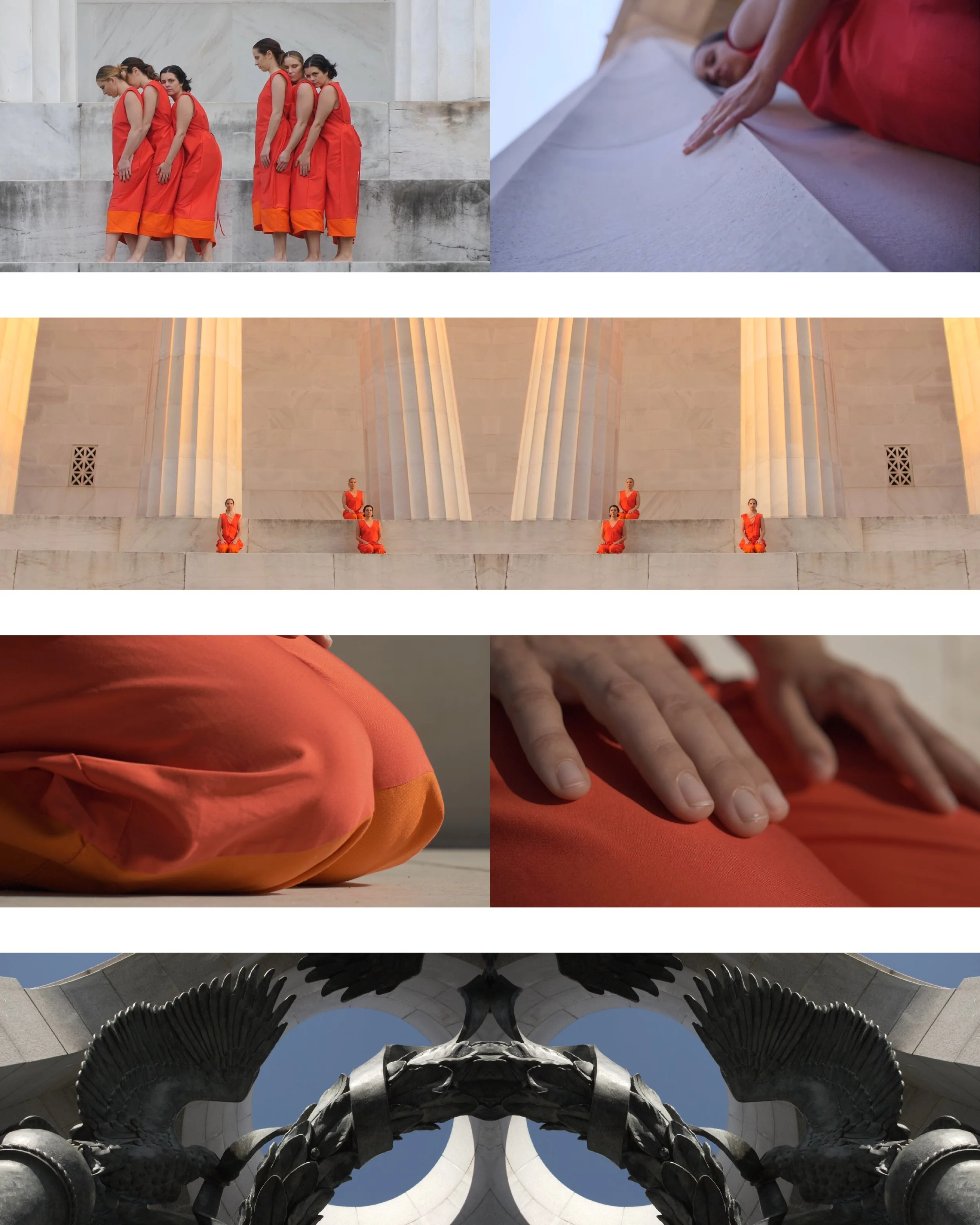

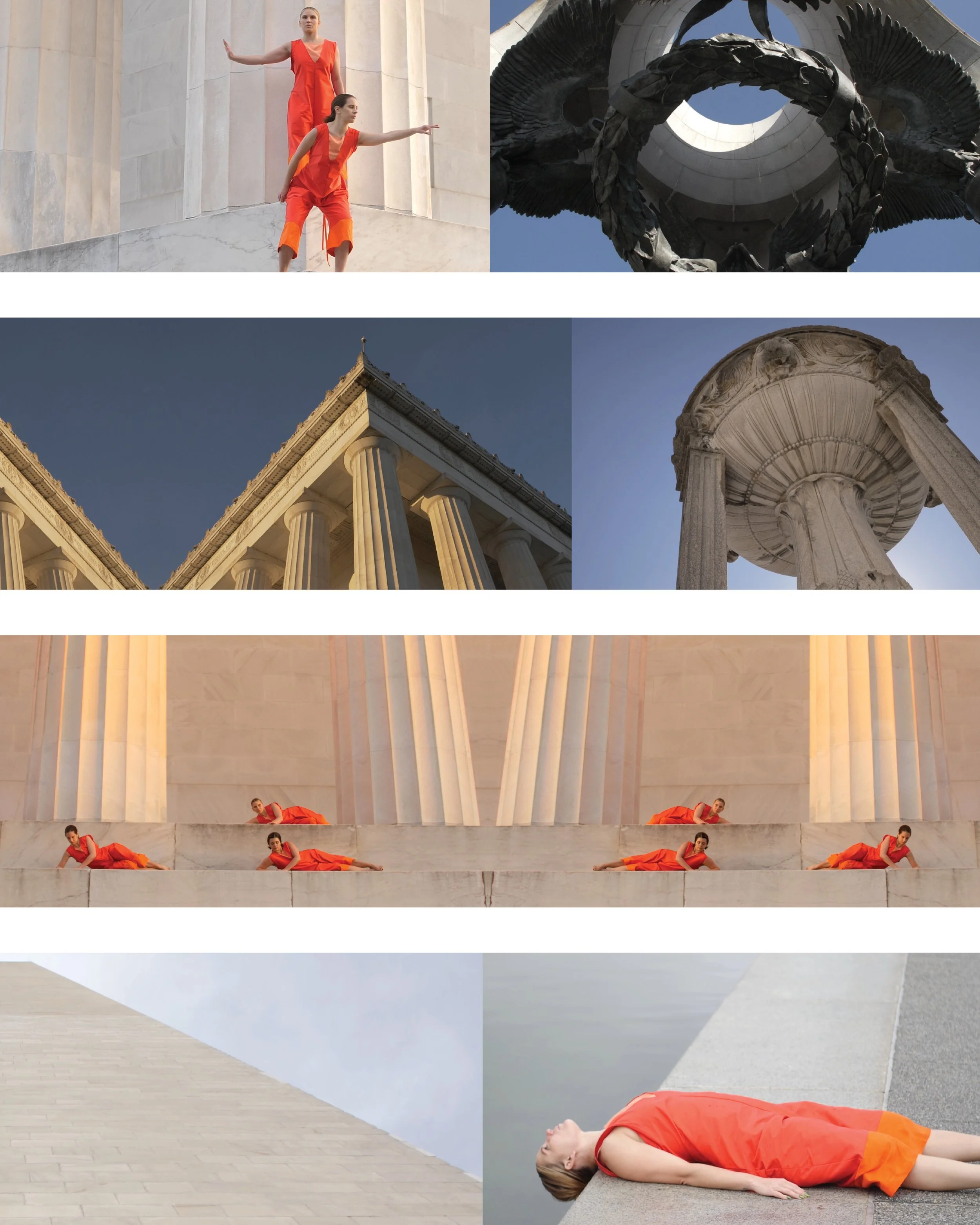
Exhibition: Samstag Museum, Adelaide (2020); Embassy of Australia, Washington D.C. (2019) ; Artspace, Sydney (2018)
Lullaby frames monumental architecture as a haunted cultural fiction — structures that encode patriarchal and colonial hierarchies as authoritative spatial systems. The two-channel video installation documents a series of performances staged at five of the monuments in Washington D.C., including the Lincoln and Jefferson Memorials. To counterpoint their seeming permanence and rigidity, Saxelby turns to ritual as an ephemeral social symbolic behaviour capable of transmitting cultural knowledge across generations and geographies. Through invented ritual gestures, the work presents a proposition: can we invent new meanings for old monuments by embedding them with new choreography and behaviour? Using the existing structures as raw material, Saxelby contorts them in the editing process, composting their static, singular, authoritative forms into architectural imaginaries that are fluid, shape-shifting and multiplicitous.
Performance/Choreography: Vanessa Soudan | Performance/Costumes: Bailey Nolan | Cinematography: Katie Schuler | Photography: Kristin Adair | Sound: Great Waitress (Laura Altman, Monica Brooks and Magda Mayas)


Exhibition: The Phillips Collection, Hirshhorn Museum, Smithsonian Arts & Industries Building, Anacostia Art Center, and IA&A at Hillyer, Washington, D.C., 2018
To Future Women (2018, 2037) is a twenty-year time capsule of letters written by the public to the next generation of women, memorialising the 2017 Women's March and #MeToo movement. Presented across five museums and art spaces in Washington D.C. on the one year anniversary of the Women's March, it received over 3000 letters in 10 different languages, including from Hillary Clinton, Jill Biden, three generations of one family, a kindergarten class, and an incarcerated man. It archives the desperate longings and desires of real people fearing the loss of women's bodily autonomy and civic rights. It uses the intimacy of the letter form to ground political resistance in a personal human relationship across time. Operating under the premise that what a culture ritualises is what it finds valuable, Saxelby questions how we remember and ritualise women's histories of resistance, instrumentalising art institutions as makers of culture and history. By framing the archive as an artwork and embedding re-exhibition in the contract, she holds the museum contractually accountable as a caretaker of women's protest histories. To Future Women is currently inhabiting The Phillips Collection Archive until 2037, when it will be re-exhibited on January 21, the 20th anniversary of the Women's March.
Photo: Kate Warren, Joe Gibson
The Architecture of a Witch's Hut


Exhibition: Artereal Gallery, Sydney (2019); UNSW Galleries, Sydney (2018); Wassaic Project, New York (2017)
The Architecture of a Witch’s Hut (2017) stems from the idea that a witch’s home is one of the few typologies of architecture built by a woman for herself. The artist independently built a hut — its height determined by how high she could reach on a ladder and its joinery determined by the tools and materials on hand. Created during an artist residency in upstate New York, the structure references the surrounding New England architecture and the history of witch persecution in nearby Salem, 300 years prior. The project culminated in a collective burning of the hut with fellow artists and members of the local community, reclaiming fire from its centuries-long use as an instrument of women's persecution into an invented ritual of communal remembrance.
Photo: Subodh Samudre